Remember Jade Alexis? She's the fun, functional and fierce Reebok Global Instructor I interviewed last week. Check out the rest of my interview with her, here!
ASA: Has the launch of Reebok's female-focused fitness initiative helped to broadcast your message of making workouts fun?
Jade: Reebok's message falls in line with my desires to have a FUN work out. Thus far, working with Reebok and knowing that their initiative is in line with my philosophy encourages and motivates me to be on point and keep it FUN!
ASA: You talked about preventing burn outs through balance, how do you keep your workouts balanced?
Jade: On a regular basis I do the things I really enjoy; ride, swim, box, do weights, and practice yoga. In occasion when I need a change of pace, I may play basketball or try a new/different class or workout w/ a friend. Additionally, I make sure to incorporate all: weight/strength training, cardiovascular and flexibility into my week. Most importantly I balance training with rest and recovery, I have 1-2 days off a week.
ASA: What role does nutrition have in your life? What's your favorite quick go to meal and what's your guilty food pleasure?
Jade: Nutrition is VERY important, it effects my energy levels, my health, my sleep ... Favorite quick to go meal is Greek Yogurt w/ blueberries and granola ...guilty food pleasure, sweet potato fries and I LOVE crumbles, apple or berry w/ a scope of ice cream!
ASA: What's your favorite at home exercise and at home workout equipment?
Jade: Exercise: Push up Equipment: Jump Rope What products does Reebok make that could help women workout from home or on the go while traveling? - Jump rope - resistance bands - dumb bells - stability balls
ASA: Living in a four season state; how do you keep exercising new and exciting when you're stuck indoors or in the same environment?
Jade: When it gets to cold to be outside, I move it indoors and can do many of the same things indoors that I do outdoors, swim, ride - its not as climatic or as refreshing being indoors though.... I also try new things there are a variety of classes offered at the gym, so its always new and exciting to try a new class or different instructor.
Monday, November 24, 2008
Ask a pro: Reebok Global Instructor Jade Alexis part 2

Friday, November 14, 2008
Odds and ends from Nancy Clark
I recently found registered dietitian Nancy Clark's monthly nutrition newsletter in my inbox, score! Here are some highlights from her jam packed Novermber/December articles:
Protein
The maximal effective single dose of protein to build new muscle is ~35 grams of high quality protein (milk, egg, fish, meats) at one time. While most athletes easily eat this amount—plus more—three times a day to fulfill their daily protein requirement, elderly folks may not. Hence, they become weak and frail. The bottom line: Be sure you (and your parents and grandparents) maintain your health and vitality by enjoying protein with each meal!
Organic foods—are they better?
Many athletes debate whether or not they should buy organic foods. In terms of nutritional value, studies in the US suggest no significant differences, but studies in Europe report higher amounts of nutrients, including antioxidants. Eating a larger portion of conventionally grown produce can resolve any potential differences.
The bigger issue relates to protecting the soil and limiting water pollution from pesticides and fertilizers that seep into the ground. For those reasons, buying organic produce is a smart choice, particularly if it is locally grown, uses less fuel to be transported, and supports local farmers.
Simple strategy for eating better
If you want to improve the quality of your diet, think about one thing you could do each day to contribute to a healthier intake. Write down your goal for the day, then assess your level of confidence in achieving that goal. For example, your goal might be to eat fruit with lunch. If you are very confident you can do that, go for it. But if you are not at all confident, take a look at the barriers, and perhaps figure out another way to boost your fruit intake. Banana on cereal for breakfast? Fruit smoothie for a post-exercise recovery drink?
The bottom line: Set yourself up for success by developing sustainable eating habits. Stop making resolutions—dietary “shoulds”—that repeatedly fail.
Want food help?
The best dietary advice comes with a one-on-one consultation with a sports dietitian. To find your local expert, check out the referral network at www.SCANdpg.org.
Recommended ReadingNancy's newsletters are packed with info! I highly suggest making your way to her site to sign up for the free monthly letters!
Helpful books can be a welcome gift. Here are a few suggestions for your active friends and family members. Of course, I recommend these books that I have written:
Nancy Clark’s Sports Nutrition Guidebook, 4th Edition (2008)
The sports nutrition bible for learning how to eat to win.
The Cyclist’s Food Guide: Fueling for the Distance
For cyclists who are doing long rides or tours.
Food Guide for Marathoners: Tips for Everyday Champions
Perfect for novice marathoners who fear hitting the wall!
Excellent books by other authors include:
American Dietetic Association’s Complete Food and Nutrition Guide by Roberta Duyff
What to Eat: An Aisle-by-Aisle Guide to Savvy Food Choices and Good Eating by Miriam Nestle
Vegetarian Sports Nutrition by Enette Larson-Meyer
Secrets of Feeding a Healthy Family by Ellyn Satter
Healthy Homestyle Cooking by Evelyn Tribole
Wednesday, November 12, 2008
Ask a pro: Reebok Global Instructor Jade Alexis
I got a chance to send Jade a few questions to find out how her methods of training work. Check out some of her responses today and check back for more later on!
ASA: What kinds of exercising are involved in a boot camp session?
Jade: My boot camp training session includes a plethora of total body and body weight exercises and incorporates many sports conditioning drills. The exercises involved in the class included things such as running, hopping, jumping, push ups, squats, lunges, and speed ladder drills/agility.
We also do short sprints, slides and have the body move in different directions and at different speeds. Each session encompasses all; strength, cardiovascular and functional exercises.
ASA: How is boot camp training beneficial?
Jade: Beneficial because it motivates one to work hard and push to a state of mind over matter in which new limits can be reached - one can reach and feel a great sense of accomplishment. From a physical standpoint, you burn a ton of calories, build strength and develop cardiovascular endurance all while having fun!
ASA: What is the proper attire for boot camp training? Does Reebok offer specific boot camp gear?
Jade: Clothing that won't restrict movement. Really, whatever is comfortable. Reebok has several shoes, cross trainers that are appropriate for this type of class.
ASA: A lot of popular weight-loss television shows (Celebrity Fit Club, The Biggest Loser) rely on boot camp training, why do you think this is and what options do women have to mimic boot camp training on their own?
Jade: I suspect that these shows use boot camp training because it is fun or at least it can be! Its great for TV and when done well and incorporated with a good nutrition plan and sufficient rest then weight loss/results are guaranteed - that's great for these TV shows.
Several of these shows such as the biggest loser have workout videos that can allow women to mimic boot-camp workouts on their own. Taking a boxing class or a boot camp class and learning the moves and drills can give women some of the tools to be able practice "boot-camp" on their own at home.
ASA: What does cross training accomplish that a single track routine does not?
Jade: Over time a single track workout routine will likely get boring and the body will adapt to doing the same exercise over and over again. One will reach a point where the body no longer gets the same results from the same workout. Cross-training mixes things up so that the body is constantly challenged in different ways to avoid boredom, as well as engage more and different muscles and prevent the body from adapting which will ultimately help avoid a plateau in results.
ASA: You talked about keeping workouts fun, functional and fierce; can you explain this a bit more? How do you encourage fun, what workouts are most functional and why, and what is it to exercise fierce?
Jade: Fun! Exercise should be fun, we should smile and laugh and enjoy the exercise we are doing, it shouldn't be a dreadful experience. I encourage fun by encouraging people to participate in activities/sports/exercises that they enjoy doing - that's why boot-camp is fun, it takes pieces from different sports that many enjoy. Additionally, good, upbeat music, smiles, good positive energy and words also aid in creating a fun workout.
Functional! Involves doing movements that mimic our everyday activities so that we can become stronger and more efficient in our daily lives and/ or sports that we participate in
Fierce! Means to go hard! Give it all, 100 % and be intense.
Monday, April 28, 2008
Ask A Pro: Dr. Larry McCleary

Through his work with children, he has studied the impact of food on the human brain. Below is my interview with him, where he shares some of his work and recommendations for the best brain foods. For more information on Dr. McCleary or brain food, check out his site.
A Sizable Apple: With your studies in neurosurgery, what sorts of foods have you found to be the most beneficial to fighting neurological disease?
Dr. McCleary: I am a pediatric neurosurgeon. That means I do brain surgery in children. Many years ago I was looking for additional ways to help these kids recover better and faster from the serious brain problems they were experiencing. At the time, doctors were using sugar water IVs to provide support. I knew there had to be a better way to provide the brain all the nutrients it required. As a point of reference, the brain comprises 2.3% of the total body weight, yet consumes almost 25% of the energy. That means it is over 10 times as active as the rest of the cells in the body. It also lacks the ability to store any considerable supply of nutrients, so it must receive a continuous, high stream of nutrients to function optimally. Based on these observations, I began researching additional nutrient sources for my patients.

So, to summarize, the nutritional bottom line is to eat a broad range of colorful foods and spices and to avoid foods that contain empty calories such as trans-fats (partially hydrogenated vegetable oils), refined carbohydrates and starchy foods (bread, potatoes, pancakes, cookies, cakes, candies, etc), and go easy on artificial sweeteners. I also recommend the avoidance of MSG, the flavor enhancer found in many Chinese restaurant dishes. It tends to over stimulate the brain and harm nerve cell function.
ASA: How does what we eat affect our brain?
Dr. McCleary: We are what we eat. This is even more true for the brain because it is 60% fat and the fats we eat end up essentially unchanged in the very membranes that surround and affect the function of each nerve cell. Eat good fats and other nutritional raw materials and you and your brain will be happy!
ASA: What have you found about diets change as we age?
Dr. McCleary: The nutritional requirements are fairly similar regardless of age. What changes is the number of calories we eat as we age. In general, activity levels decline and with that is an associated fall in energy (food) requirements. This drop in intake makes it more difficult to maintain high essential nutrient consumption while calories are falling. That means vitamin levels fall, for example. So the choices and consumption of nutrient dense foods of the type we have discussed, at the exclusion of empty calorie foods, becomes more important as we age. A multi-vitamin and mineral supplement would be a good idea for everyone, but is essential as we age.

Friday, April 18, 2008
Ask a pro: Marissa Schiesser

Marissa Schiesser is a Certified Nutritional Practitioner in Canada. Her site, ‘A Healthier Me’ has information for workshops; recipes and free stuff aiming at helping women feel better and get in shape.
A Sizable Apple: Can you tell me about yourself and your practice?
Marissa: I have a passion for teaching busy people the nutrition and lifestyle know how and the mindset to reach their health goals. I like to make it easy and simple by creating new positive and healthy habits that simply cause the old habits that are no longer serving you to slide away. There is a misconception that [meeting nutrition goals] has to be complicated, painful and hard. I don't believe in no pain, no gain. Life is about joy, not pain. It brings me joy to see the delight and progress that my clients go through. This is not to say that they don't put in any effort, they do have to work on it. There is no magic bullet, believe me I have searched for it and been disappointed many times. To have real change requires commitment and effort. This can come in the form of joy though and that is where I come in with support knowledge and understanding.
ASA: Explain the 'A Healthier Me' system?
Marissa: The Healthier Me System™ is what I developed and use with each of my clients to help them achieve their goals. It has been the secret to creating lasting changes for me and my clients. By working through each of these steps, over several months, you will achieve more energy, less stress, a stronger sense of yourself and an understanding of what makes your body healthy. I want to help you get inner calm, joy and health. These are the things that I have found to be vital to reaching and staying with your health goals.
1. Make your health and wellness a priority.
2. Eat and live mindfully.
3. Support your body and balance your hormones.
4. Get the stress out and the cravings that go with it.
5. Learn how to shop for quality foods.
6. Get emotional support.
7. Feed your mind as well as your body.
8. Cleanse your body and mind.
9. Create a healthy home and work environment.
10. Maintain a simple program for a healthy life.
ASA: What are some of the most common issues clients come to you with, and what are some solutions you offer?
Marissa: Most of my clients are busy women with not a lot of time for themselves. They almost always have some form of PMS, have digestive complaints, cravings and high stress. I walk them through and give them support by strengthening their bodies first and then cleansing out the stuff that is making them feel bad, I end with a supportive maintenance program that empowers them and makes them independent and in control of their health. When the body is supported with the nutrients it needs it does not scream out for more and it provides balance in the mind.
ASA: I like A Sizable Apple readers to understand what the nutrition and fitness routines of pros are, can you share your typical workout routine and also nutritional habits with my readers?
Marissa: I love to let others know what I am doing because it helps to motivate them and know what is possible. My routine is ever changing as I learn and progress and as my mood and interests change. At the moment I get 30-60 minutes of exercise every day. This is usually in the form of hiking through the woods behind my house. I also do a bit of yoga and qi gong to keep the energy flowing and my muscles stretched and limber. When it starts to get dry and sunny I will be out a bit more doing some rock climbing and biking; nothing crazy though. I also make sure that I have time every day to sit and let my mind be present and get myself grounded with meditation. Meditation also comes while I am hiking in the forest; you don't have to sit and be quiet and still for meditation, you just have to be present.
As for my nutrition, I start every day with a big glass of water, sometimes with lemon, to flush out my system and to wake it up. I then have a cup of herb tea followed by breakfast, which varies. Right now I am eating soaked muesli. I drink a lot of water and herbal tea throughout the day. I have some sort of snack in the morning, usually fruit or a granola bar/cookie I made. For lunch I have leftovers or eggs with a green veggie and toast or salad with beans or goat feta. I get as many veggies in as I can both raw and cooked. I will have another snack in the afternoon and then for dinner I have veggies, a grain, sometimes beans or meat or goat cheese. You can see some of the meals I make on my blog. It really varies and I like to be creative with cooking.
ASA: What kind of tips do you have for busy women who are looking at easy to manage tips to starting the process of getting into shape?
Marissa: 3 quick tips to bring greater ease and health to your life are:
Eat food in its whole and unprocessed for as much as possible. Have vegetables or fruit with every meal and add fiber to your meals in the form of whole grains, nuts and seeds. Try new whole foods such as quinoa, flax seeds and rappini. If you are not sure how to cook them and want inspiration take a look at my recipes.
Drink water. I know this is obvious but it doesn't always happen. Dehydration is the biggest cause of cravings. If you are craving something sweet or carb filled and you know that you should not be hungry have a glass of water. The craving will usually subside. Caffeine is something that is very dehydrating and causes stress in the body. If you are not ready to let go of it yet please drink 2 extra glasses of water for every cup of coffee.
The biggest factor to not being healthy or not being able to reach your goals is stress. Stress will stop you every time; it will create cravings, blood sugar ups and downs, weight gain and more. Stress is our reaction to a situation and we can change that reaction. Start by remembering to breathe and take a step back before reacting. Oxygen will immediately calm your body.
ASA: What are common misconceptions you see of women trying to get healthy? What solutions do you have for those misconceptions?
Marissa: Searching for one solution that covers it all and cures all. There are so many diets and solutions out there that claim to fix all of your problems it can be overwhelming. The biggest thing to realize is that we are all different, our biochemistry is different and therefore our needs are different. The biggest thing you can do is to learn how to read your own internal "GPS" system, it will guide you and always let you know what is best for you. Just because something worked incredibly for your friend doesn't mean it will for you.
You can learn how to listen to your body and follow it, that is something I work with my clients on. If you would like to get started please take a look at my upcoming phone workshops.
Thanks so much for sharing this information and all the great info that you give to your readers. I would like to offer your readers a FREE download of my past workshop Eat Well on the Go. You can get it here (download click the download button or right click and save).
Friday, March 28, 2008
Ask A Pro: Leslie Goldman (Pt. 2)
A Sizable Apple: You have written about your own battles with self image in particularly battling an eating disorder, and also about binge eating. What advice do you have to maintaining a healthy lifestyle based on what you've learned from your past and reporting on others?
L. Goldman: Well, I never struggled with binge eating myself - my problem was anorexia in college. It was a very kind of cliché ED: I was the straight-A, perfectionist, eager-to-please young woman who goes off to college and freaks out and develops and eating disorder to cope with it, to cope with this new dis-order in her world. I lost a significant amount of weight; not so much that the fashion world would be appalled, but enough that I looked horrible. In terms of recovery, I got better physically within my freshman year, gaining most of the weight back. . . but it wasn’t until, I’d say, my junior year that I started looking deeper and realizing it wasn’t just about food—that it was so much more.
As for maintaining a healthy lifestyle, I have to say being ready to change is a critical step. You can’t really help someone if they don’t want to be helped. So once I was mentally and physically prepared to make a change, I made damn sure I had a good therapist. You can and should couch-hop a couple times if you don’t click with the guy or lady right away. I found a male social worker who is challenging and doesn’t coddle me. Some people like a softer approach. I wanted confrontation.
Also, I have to give a shout-out to medication. Honestly, Luvox saved me. I’m know some people out there are anti-antidepressants and so was I for the first few years of college. I thought there was a stigma. Little did I know that 10 years later, 95% of my friends would be on Zoloft, Paxil or Lexapro. That’s an exaggeration, obvious, but I do maintain that being on an SSRI helped to clear away the clouded vision I had of my body. It didn’t make me feel instantly pretty or skinny or sexy, but I feel it put me on a level playing field to fight the disease.
ASA: I think it's sometimes difficult for women to see fit fitness and nutrition writers/spokespeople discuss alternatives and workout plans that are made to look easy, without actually understanding what work a successful plan entails. What is your fitness plan like?
L. Goldman: I work out five to six days a week - which some may say is a lot, but it is key for my stress management and I can literally feel negativity build up inside me unless I unleash it through sweat and hard work! One of those days is a yoga class, then 4 days a week I'll do about 30 minutes of cardio (Love the StepMill machine...now that it's getting warmer in Chicago, I can't wait to run outside). I also lift weights twice a week. I wouldn't say my plan is easy, but it's become a vital part of who I am. I wake up early - 6am-ish, go workout, get my sweat on, shower and have the whole day to be productive. And goof off. I only wish I lived somewhere warm and hilly so I could go hiking...but I do love my Chicago!
ASA: What is fittodaytv.com about? Who is it geared towards and what is its mission?
L. Goldman: Fit Today is a Chicago show, the brainchild of NBC5 Fitness Team correspondent Andrea Metcalf. She asked me to be a co-host and of course, I accepted! My role centers on food and nutrition, so I've been interviewing leading area RDs, nutritionists, chefs and more. Dave, another co-host, is all about lifestyle Inspiration, a perfect fit for him because he lost 150 lbs (!!!) and is now a trainer. Joanne, the final co-host, does a bit of food, a bit of lifestyle. Andrea pulls everything together with general health and medicine.
For the past month or so, we've been filming on location at various Chicagoland area locations, such as Crunch Fitness, local hospitals and restaurants and even McDonalds, which is cosponsoring the show (a huge deal!) in an effort to promote their heathier offerings like the Asian Chicken Salad, Apple Dippers, Dasani bottled water and, my favorite (and I'm NOT just saying this because you know I've mentioned these before) the Fruit & Yogurt Parfait. In fact, starting last week, a photo of Andrea, Dave and myself, dressed in workout gear, is appearing on tray liners at more than 500 McDonald’s across Chicago and Northwest Indiana for two months! People are literally eating off of me!
Thursday, March 27, 2008
Ask a pro: Leslie Goldman

Goldman is also a well known contributor to Women’s Health, Runner’s World, Health and People Magazine among many more. Her work can be found on the iVillage.com blog- The Weighting Game. Below is my interview with her discussing her health projects, and her personal commitment to health and fitness as well.
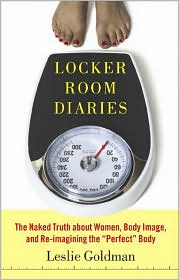
A Sizable Apple: Your book, "Locker Room Diaries" talks about women's body images, can you explain a little bit about image acceptance and the "perfect" body?
Leslie Goldman: The premise of Locker Room Diaries is that I spent about five years observing and talking with women of all shapes and sizes about their body image. Why is it, I wanted to know, that almost no one seems satisfied with her physique? I chose the locker room because, yes, it can be a nice retreat, a place to toss aside our worries of the day. But it is also where our flaws become most apparent beneath those awful fluorescent lights-- and where most of us can’t help but wonder how we “measure up.” Who hasn’t tried to sneak a peek to see how we stack up next to the woman at the locker next to us – Does she have cellulite? What does her stomach really look like under that t-shirt?
When we are naked, we are at our most vulnerable — physically and emotionally. There are no Miracle bras to lift our breasts to magnificent heights, no control-top panty hose to smooth away the dimples, no high heels to coax our calf muscles out of hiding. And without the armor of clothing, insecurities emerge, with nothing to hide us except a measly little towel. As someone who works out a lot and spends a lot of time in the locker room, I started hearing these comments from women – horrible comments that, if our partner or spouse uttered them, it would be considered emotional abuse…but if we say them to ourselves, it’s somehow acceptable.
Things like, “If I could just cut off this part of my leg, then I’d be perfect” or “The scale says 120…I’m so fat! Why can it just say 116?” I realized how what goes on in the women’s locker room can be viewed as a distillation of our of body-obsessed society’s impact on women.
For my book, I spoke with little three-year-old girls who talked about being on diets, pregnant women and new moms battling their shifting weight, women of all different ethnic backgrounds, women who had undergone gastric bypass, women who had overcome eating disorders like anorexia, bulimia and compulsive over-exercising, and women in their 60s, 70s and 80s for the chapter on “the older generation.” Bottom line: The grass is always greener. Everyone wants what they can’t have (tall vs petite; slim vs athletic; 34A vs 40DD) and very, very few women were happy as they are. Of those who are, the majority of them fell in the “older women” category, which is why I especially enjoyed interviewing those women. They had so much wisdom to impart – many of them spoke of how the years have allowed them to view their body as more than just eye candy, but a tool for building a family, fighting off disease, caring for grandchildren. It became less about vanity and more about keeping themselves healthy and strong.
ASA: How can we change how we view the media to benefit our personal body images?
L. Goldman: We all know that companies, from perfumers to maternity apparel stores, use sex and women's bodies to sell their products. For the majority of Americans, it's accepted. Not many of us write letters to the heads of television channels or editors-in-chief of magazines, decrying the oppression of women. Surely some do, but for rest, we generally just flip the page or change the channel when these demoralizing ads appear.
Sometimes, we don't even realize an ad is especially oppressive or seriously digitally retouched. I tend to fall in the middle of the "do something" spectrum, perhaps a bit towards the proactive end. For my own sanity, I specifically avoid TV shows and publications known for ads showing pin-thin models, women lying in bloodied heaps on the floor, women as nothing more than a body part that needs to be whittled down.
There was a time where I actually tuned into the Howard Stern show -- why, I have no idea -- and it was only once I realized and said the words out loud, "Hey, this show makes me feel like crap!" that I switched channels forever. I also speak publicly about the effects ads and airbrushing can have on American women and men alike, and a hush falls over the crowd as recount a story from a psychologist colleague of mine: She was treating a woman for an eating disorder -- a patient who, coincidentally or not, worked in the art department for a major lingerie company (I won't name names...it's a secret). She said everything, from wiping away cellulite to lengthening navels to elongate the torso, took place via retouching software, only to be transmitted to thousands of consumers as "real."
The remainder of my interview with Leslie will appear on A Sizable Apple tomorrow!Wednesday, February 27, 2008
Ask A Pro: Self Magazine Dr. Callahan
The Following "Ask A Pro" interview was taken from Self Magazine.com.
Dr. Lisa Callahan is a medical director of the Women's Sports Medicine Center at the Hospital for Special Surgery in Manhattan. I've picked my favorite of readers questions and responses by Dr. Callahan.
Self Magazine Reader Question: I saw an ad offering to pay women $500 to join a clinical trial. Is this practice legit?
Dr. Callahan: Yes. Research institutions often compensate study participants. Still, it's crucial to do your homework before signing up: First, ask for a copy of the informed consent form. Look for a dated approval number from an institutional review board, an independent committee that takes steps to ensure the study is safe and ethical. Then carefully review the potential benefits and risks of joining (though rare, injuries can occur). Once you're satisfied the money will be worth the risk, you can make a contribution to medicine with confidence.
SM Reader: What are heart palpitations, and are they ever dangerous?
Dr. C: Heart palpitations are a series of rapid or irregular beats that can be scary—but they are not dangerous in and of themselves. Occasionally, however, they are caused by serious underlying medical problems, such as heart disease or hyperthyroidism (an overly active thyroid gland). That brief fluttering or pounding you feel in your chest when you speak in front of a group or when you narrowly avoid an accident is most likely benign anxiety-provoked palpitations. Other culprits include caffeine, exercise, stress, nicotine, cough and cold medications, asthma inhalers and some herbal supplements. If you have heart palpitations but no other suspicious symptoms, you're probably fine. But if you're in doubt, or you're experiencing dizziness, shortness of breath or chest pain, for instance, do see a doctor right away.
SM Reader: Can using a light box help me keep the winter blues away?
Dr. C: Yes. Research suggests light therapy can help people who have seasonal affective disorder, a type of depression that strikes in the dark months of fall and winter. Talk to your M.D. if you have symptoms such as fatigue, sleep problems and food cravings. They affect up to 20 percent of adults. How light therapy works: Each morning, you sit in front of a lamp that's about 20 times brighter than a normal light (you can find one at SunBox.com). You should notice a sunnier mood within a few weeks.
SM Reader: I've been feeling more tired than usual. Should I take an iron supplement?
Dr. C: Not so fast. Iron deficiency is a common problem among women of childbearing age, but it's not the only possible cause of your fatigue. Anything from thyroid dysfunction to sleep deprivation to depression could be to blame, which is why it's critical that you and your doctor first pinpoint the cause. If your exhaustion lingers longer than two weeks, ask her for an iron profile, a blood test that can reveal below-normal iron levels. If you are anemic, she'll likely recommend a short-term supplement. Don't take iron pills unsupervised, however—it could be dangerous. If you are one of the 2 million people who have hemochromatosis, a genetic condition that prompts the body to store too much iron, supplements can lead to liver damage. (You'd never know if you have it without the iron profile.) If your problem isn't with iron, your M.D. can help you figure it out. Chances are, you'll start feeling more like your old energetic self very soon.
SM Reader: I haven't had any shots since high school. Do I need boosters?
Dr. C: Probably. The Centers for Disease Control and Prevention in Atlanta now recommends all adults get the new Tdap vaccine, which protects against tetanus, diphtheria and pertussis (whooping cough), if it's been more than 10 years since their last tetanus shot or if they have close contact with infants. (Babies are particularly vulnerable to whooping cough.) You also might want to ask about a hepatitis B injection, especially if you live with someone who's already infected, you're not sexually monogamous or you work in an environment that exposes you to blood or bodily fluids. Visit CDC.gov and click on Vaccines and Immunizations for a quick shot of important information.
Wednesday, February 20, 2008
Ask A Pro: Self Magazine Dr. Bauer
This edition of "Ask A Pro" was taken from Self Magazine.com. The following is an interview with Dr. Joy Bauer, author of Joy Bauer's Food Cures (Rodale) and The Complete Idiot's Guide to Total Nutrition (Alpha Books). Below are Self Magazine.com reader questions and Dr. Bauer's responses.
Self Magazine Reader: What should I do first when my weight starts to creep up?
Dr. Bauer: First, identify the reasons for the change. Some culprits are easy to spot, such as canoodling with Ben & Jerry, but a food diary can help you uncover subtler sources of added calories, like inflated portions or extra cocktails. Scaling back your intake to your pregain level should halt or even reverse the trend, but for faster results, also try these three easy calorie-trimmers:
SM Reader: Make every sandwich open-faced.
Dr. B: Bypass the top slice of bread to save 70 calories. If you eat a sandwich a day for lunch, you'll shave off 490 calories a week.
Eat slowly. Turn off the TV, have a seat and savor the flavor of every bite. Research shows that women take in about 67 fewer calories per meal when they slow down.
Skip salad dressing. Use balsamic vinegar instead. Dressing can be 75 or more calories per tablespoon, so this trick saves at least 150 calories per salad. You're feeling lighter already!
SM Reader: How can I shake these last 5 pounds?
Dr. B: Use my 25 percent solution: Leave 25 percent of your meal on the plate at lunch and dinner (only nonstarchy veggies such as spinach, broccoli and peppers are exempt from the rule), and increase your workout time by 25 percent. Little changes can add up: If you eat 6 ounces of sirloin instead of 8 and only 3/4 of a baked potato, you trim nearly 200 calories off your meal. Do this every day for a month and you will shave off 3 pounds. Factor in the extra exercise, too, and you'll be well on your way to dropping those final 5.
SM Reader: How can I quickly slim down?
Dr. B: Drastically cutting carbs is speediest, but it's not the most effective nor the healthiest way to lose weight for good. That's because most of what you shed at first is water weight; water clings to carbohydrates in your tissues, and when you deplete your carb reserves, that water has nowhere to go but out. As soon as you begin to eat carbs again, those pounds will come back. That said, limiting refined carbs and fried foods can help you lose.
SM Reader: Are there any safe diet pills that work?
Dr. B: Over-the-counter weight loss pills are more likely to trim your wallet than your waistline. And most come with side effects, including heart rate irregularity, insomnia and nervousness. Taking prescription pills may be safer, but they can hike blood pressure or cause bowel and other socially distressing problems. A sure bet for your money: Hit the gym three times a week. Results are guaranteed!
SM Reader: What's the biggest dieting mistake?Dr. B: Not eating enough. Going below 1,000 calories a day can backfire because it's nearly impossible to maintain such a restrictive diet. Even if you're able to stick to a starvation plan, it's counterproductive: Your metabolism hits the brakes when your body detects too little food coming in, which impedes weight loss efforts long-term. Plus, your body may eventually begin to raid its own muscle stores for the energy it needs. The best news I can give dieters: You can eat plenty of healthy foods and still lose weight.
SM Reader: What is your favorite trick for warding off extra pounds?
Dr. B: Give away all your fat clothes. By keeping them around, you're sending yourself the message that gaining weight is inevitable. It's not!
SM Reader: I feel as if my appetite changes with the season. Is it all in my mind?
Dr. B: Nope, it's true: Most of us want to eat more in cool weather and less when it's warm. That's because when you eat, your internal temperature rises—great in winter, less so in summer. But aside from body heat, psychology may play a part. Bundling up in a sweater may make you relax about consuming more, whereas putting on a tank top is incentive to eat less. Regardless of the weather, make healthy food choices, watch portions and exercise. Note: If your appetite increases in the late fall and persists into spring and is accompanied by depression, you may have seasonal affective disorder (SAD). If you do, your doctor can suggest effective treatment options.
SM Reader: Will drinking water really fill me up and keep me from overeating?
Dr. B: Doubtful. Guzzling H2O has no proven effect on satiety, shows research from Penn State University at University Park. What can keep you feeling satisfied, though, are foods with high water content, such as fruit, veggies and soup. They take up more room than drier foods, and they exit the stomach more slowly than pure liquid. Start dinner with soup, have steamed veggies with your main dish and finish up with berries. You will stay full and may drop a few pounds.
SM Reader: I am watching my calories and wondering what my best bet is: beer, liquor or wine?
Dr. B: Ounce for ounce, beer turns out to have the fewest calories (13 for regular, 9 for light), followed by wine (25) and liquor (64 to 82). But when you consider how much you're typically served of each, you may be better off ordering a cocktail. That's because a drink containing a jigger of alcohol, mixed with water, seltzer or diet soda, will have no more than 124 calories—roughly 25 calories less than a 6-ounce glass of wine or a 12-ounce bottle of beer. (Light beer, with only 103 calories per bottle, is also a good choice.) If you like your drinks mixed with regular soda or juice, however, beware: You could slurp down 300 or more calories.
In the last few centuries, the science of nursing scrubs has come a long way. Thanks to information technology, your medical questions questions can be answered relatively quickly. If you need information about birth control, we'll help you find it.

Tuesday, February 12, 2008
Ask A Pro: The Paleo Diet
While writing posts for A Sizable Apple, I have always tried to bring readers an unbiased look at health and nutrition. While I'm not a doctor or nutritionist of any kind, my opinions based on practicing healthy living do sometimes sway the research and information I share. Ten thousand years ago the Agricultural Revolution was the beginning of a drastic change in the human diet that continues to this day. Today more than 70% of our dietary calories come from foods that our Paleolithic (Stone Age) ancestors rarely, if ever, ate. The result is epidemic levels of cardiovascular disease, cancer, diabetes, osteoporosis, arthritis, gastrointestinal disease, acne, and more.
In attempts to bring my readers variety and quality information, I've started a plan to update occasionally with guest interviews from doctors, nutritionists and professionals with varying view points.
The new "Ask A Pro" features will be the opinions, beliefs and studies of each professional interviewed.
As always if you would like to submit a question, concern, idea or contact regarding "Ask A Pro" or A Sizable Apple in general, please email me at asizableapple@gmail.com
The following "Ask A Pro" interview features Dr. Loren Cordain of The Paleo Diet:
- ThePaleoDiet.com
A Sizable Apple: When did you begin your studies for the Paleo Diet?
Dr. Cordain: A few years after reading Boyd Eaton’s seminal paper: Paleolithic Nutrition which was published in the New England Journal of Medicine in 1985.
ASA: What demographic has the best results with the Paleo Diet?
Dr. C: People with chronic illness or disease generally show improvement in symptoms rapidly.
ASA: Can you give an example of the types of foods included in the Paleo Diet?
Dr. C: Fresh fruits, vegetables, lean meats, seafood. Avoid grains, dairy, legumes, refined sugars, vegetable oils, salt and processed foods.
ASA: What are some of the health benefits that come from the diet?
Dr. C: Normalization of body weight, improvement in blood glucose, insulin and blood lipids. Reductions in blood pressure, better sleep, more even energy throughout the day. Reduction in risk for cardiovascular disease, cancer, many autoimmune and inflammatory diseases. For a complete list: see success stories at my website.
ASA: What are some typical concerns or issues that have come forth from the diet?
Dr. C: How do I get sufficient calcium if I stop eating dairy foods? How do I get sufficient fiber if I reduce or eliminate grains? How do I get sufficient vitamin D without fortified dairy or margarine? Wont a high meat diet cause my blood cholesterol levels to rise? See website for answers under FAQ.
ASA: Why do you think our diets have changed so dramatically from the Stone Age?
Dr. C: In order to support 6 billion people on the planet we have become absolutely dependent upon cereal grains, a food that was rarely or never consumed by ancestral humans. The industrial revolution and mechanization of the food supply has allowed a few people to feed the masses. With increasing industrialization the average citizen could eat any food they desired including sweet foods and high fat foods and combinations thereof which we call processed foods. These foods have only become widely available in the past 200 years.
ASA: Eating according to the Paleo Diet would obviously be much easier if we were in older times and able to harvest our own food. What advice do you have for attempting this diet in a world where processed foods have become the norm, and controversy over produce not being so fresh or altered with chemicals or pesticides?
Dr. C:
1. First, start by shopping for your foods on the outside aisles in the supermarket and avoid the center aisles. This tactic ensures that the bulk of your foods will be fresh fruits, veggies, lean meats and seafood.
2. Prepare some meals in advance, so that the preparation time is minimized, and brown bag meals when you will not have access to “real living” foods.
3. Try to include a high protein animal dish at every meal, as protein has twice the satiating ability of either fat or carbohydrate.
4. When you stray from humanity’s real foods (fresh fruits, veggies, lean meats, seafood) remember how bad you felt & remember how good you felt when you woke up in the morning after 24 hrs of eating nature’s bounty.
For more information on the Paleo Diet and Dr. Cordain's other projects, visit www.thepaleodiet.com and www.dietaryacnecure.com.