In the midst of busy lifestyles and constant advertisements plastering pictures of the not so normal woman, keeping up with a healthy self image is a challenge. Women's Fitness.net had a great feature on the top 10 tips to enjoying a healthy self image.
Some of my favorite of their tips are great pieces of advice that can be instilled at any age. Recognizing your uniqueness, from experiences, hobbies to your individual physical and emotional attributes, your individuality makes you beyond valuable and unduplicatable.
Another favorite from the WF.net site is to be accepting with change. Understand that qualities you deem negatives are not concrete, and be patient with yourself as you work towards personal changes. More so, reward yourself for your accomplishments and find a sense of pride in meeting your goals.
Strengthening self image is a possible task for women of all ages. Be it in the moments before bed, or while traveling to and from work, set aside a particular time of day to work on your self image.
Sometimes some positive talk, spending time with loved ones, or being constant with rewarding positive behavior, keeping up with your core will benefit you in all life aspects.
Friday, February 29, 2008
Strenghthening Self Image

Thursday, February 28, 2008
Protection from the storm: healthy helpful kits
 As a weather fanatic, my brother knows about every storm that's coming towards us. And although we live in Michigan, he loves tracking the hurricane season in the summer and fall. Thankfully, we're not in the path of hurricanes, but thunderstorms, tornadoes, hail and snow can be dreadful.
"To protect yourself from bad weather, you'll need need a radio that runs on batteries so you can keep updated on the storm, lots of water (about a gallon for every day, per person for three days to keep on hand is good), make sure your pets are safe and are fed, and having a stock of canned, no need to be cooked food is a good idea. Another good idea is to plug and fill up your bathtub right when the power goes out, this clean water can be used for drinking, bathing or to flush the toilets." -my brother
The US government has a great site that gives tips on how to prepare yourself for any type of emergency. The site recommends keeping a three day supply of non-perishable food on stock at all times, which would include canned and dried foods (more can be found here).
Here is also another link to the US government page with other things to keep your family safe in dangerous situations. Keeping a waterproof box filled with other essentials like warm safety blankets, flash lights and extra batteries may not be used regularly, but will be appreciated in times of bad weather.
You may also want to consider stocking a safety kit for your car in case you get stuck in bad weather, with a first aid kit, water bottle, dry clothes or a warm blanket, and road flares.
Wednesday, February 27, 2008
Ask A Pro: Self Magazine Dr. Callahan
The Following "Ask A Pro" interview was taken from Self Magazine.com.
Dr. Lisa Callahan is a medical director of the Women's Sports Medicine Center at the Hospital for Special Surgery in Manhattan. I've picked my favorite of readers questions and responses by Dr. Callahan.
Self Magazine Reader Question: I saw an ad offering to pay women $500 to join a clinical trial. Is this practice legit?
Dr. Callahan: Yes. Research institutions often compensate study participants. Still, it's crucial to do your homework before signing up: First, ask for a copy of the informed consent form. Look for a dated approval number from an institutional review board, an independent committee that takes steps to ensure the study is safe and ethical. Then carefully review the potential benefits and risks of joining (though rare, injuries can occur). Once you're satisfied the money will be worth the risk, you can make a contribution to medicine with confidence.
SM Reader: What are heart palpitations, and are they ever dangerous?
Dr. C: Heart palpitations are a series of rapid or irregular beats that can be scary—but they are not dangerous in and of themselves. Occasionally, however, they are caused by serious underlying medical problems, such as heart disease or hyperthyroidism (an overly active thyroid gland). That brief fluttering or pounding you feel in your chest when you speak in front of a group or when you narrowly avoid an accident is most likely benign anxiety-provoked palpitations. Other culprits include caffeine, exercise, stress, nicotine, cough and cold medications, asthma inhalers and some herbal supplements. If you have heart palpitations but no other suspicious symptoms, you're probably fine. But if you're in doubt, or you're experiencing dizziness, shortness of breath or chest pain, for instance, do see a doctor right away.
SM Reader: Can using a light box help me keep the winter blues away?
Dr. C: Yes. Research suggests light therapy can help people who have seasonal affective disorder, a type of depression that strikes in the dark months of fall and winter. Talk to your M.D. if you have symptoms such as fatigue, sleep problems and food cravings. They affect up to 20 percent of adults. How light therapy works: Each morning, you sit in front of a lamp that's about 20 times brighter than a normal light (you can find one at SunBox.com). You should notice a sunnier mood within a few weeks.
SM Reader: I've been feeling more tired than usual. Should I take an iron supplement?
Dr. C: Not so fast. Iron deficiency is a common problem among women of childbearing age, but it's not the only possible cause of your fatigue. Anything from thyroid dysfunction to sleep deprivation to depression could be to blame, which is why it's critical that you and your doctor first pinpoint the cause. If your exhaustion lingers longer than two weeks, ask her for an iron profile, a blood test that can reveal below-normal iron levels. If you are anemic, she'll likely recommend a short-term supplement. Don't take iron pills unsupervised, however—it could be dangerous. If you are one of the 2 million people who have hemochromatosis, a genetic condition that prompts the body to store too much iron, supplements can lead to liver damage. (You'd never know if you have it without the iron profile.) If your problem isn't with iron, your M.D. can help you figure it out. Chances are, you'll start feeling more like your old energetic self very soon.
SM Reader: I haven't had any shots since high school. Do I need boosters?
Dr. C: Probably. The Centers for Disease Control and Prevention in Atlanta now recommends all adults get the new Tdap vaccine, which protects against tetanus, diphtheria and pertussis (whooping cough), if it's been more than 10 years since their last tetanus shot or if they have close contact with infants. (Babies are particularly vulnerable to whooping cough.) You also might want to ask about a hepatitis B injection, especially if you live with someone who's already infected, you're not sexually monogamous or you work in an environment that exposes you to blood or bodily fluids. Visit CDC.gov and click on Vaccines and Immunizations for a quick shot of important information.
Tuesday, February 26, 2008
Video: Self breast exam

VideoJug: How To Become Breast Self Aware Videojug may requite you to log in to view this video, and if you don't have an account, here's the step by step instructions, straight from the video jug site.
How To Become Breast Self Aware
Become Breast Self Aware. Early detection is the best defence against breast cancer. We show how to conduct a breast self-examination to protect yourself.
- You Will Need
- 1 mirror
- Step 1:
- Examine yourself in the mirror
- Begin by looking at your breasts in the mirror with your arms by your side or on your hips and check that they are their usual shape, size and condition. Look for inversion of the nipple, irregular discharge or a rash.
- Step 2:
- Raise your arms
- Now, raise your arms and look again for any changes, particularly any signs of puckering, dimpling or redness.
- Step 3:
- Feel your breasts
- Raise one arm in the air or place it behind your head. Use the pads of your three middle fingers of the other hand keeping the fingers flat and together. Using a firm, smooth touch, feel your entire breast including the nipple and armpit (be particularly aware of swellings in this area). The aim is to cover the whole breast from top to bottom, side to side including the underarm area.
- Step 4:
- Use the circular method
- Using a circular motion, start from the nipple and move out around the breast being aware of lumps or other irregularities
- Step 5:
- Contact your doctor
- The vast majority of lumps are not cancerous. It could simply be a cyst, or just natural lumpiness.
If you have any doubts get it checked out by your doctor as soon as possible.
Monday, February 25, 2008
Motivation
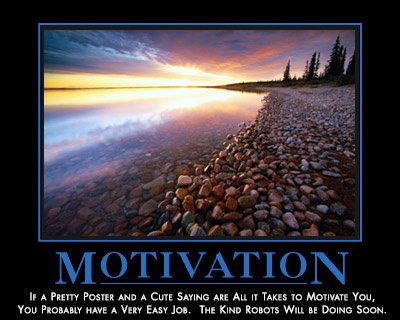
Motivation is a difficult front to keep up, with or without a workout friend. Some are driven by constant routine, others find it harder to get on track and keep going. Runner's World has a great section on their website about motivation. I think it's great that a health site takes the time to realize we're not all determined to run a marathon every morning. Sometimes it starts with smaller steps.
The Runner's World link has a couple great stories that are sure to keep you moving on. Sometimes the moving words from others is all it takes. The site also has some great links to ways you can keep motivated, be it running, biking or swimming.
I challenge all my readers, no matter what stage you are at physically, to sit down and determine your real motivation. Figure out what inspires you, and what kind of goals you have.
Friday, February 22, 2008
Help saying goodbye to dieting

a: food and drink regularly provided or consumed b: habitual nourishment c: the kind and amount of food prescribed for a person or animal for a special reason d: a regimen of eating and drinking sparingly so as to reduce one's weight
- Merriam-Webber Dictionary
And while I value the attempt made by Weight Watchers to offer less restriction, more choices, and a stray from the idea of providing food, there are still restraints and a nutrition program to follow. I've never been a fan of dieting. I've always enjoyed food too much to think of restricting my intake.
However, I was taught early on through demonstration, that an understanding of nutrition beats out trying to force yourself upon parameters set by someone else. Learning the basics of nutrition, starting with daily recommended intake in each food group to understanding reading a food label, you can manage your own diet. Because, honestly, why should someone who you've never met?
Women's Fitness.net had a few great top 10 features on managing a healthy diet without dieting. In their article, top 10 reasons to say goodbye to dieting, WF.net covers everything from learning how to manage fiber intake, low fat and lean meat, to managing portion sizes and eating with all your senses. This top 10 is a great start for those on their own trying trying to get a basic approach to managing nutrition. Top 10 ways to eat healthy is also a great starting point for nutrition knowledge.
WF.net's top 10 myths and facts on food is another great place to start. Most of the myths debunked in this article are ones I've heard over and over again, some even boasted by diet plans. Myths about protein diets, fat vs. low carb foods, and carbohydrates as weight gainers are all explained. Knowing some truth behind these myths is a great way to start your own diet plan, if not a good starting point for what to look for when joining a diet.
The top 10 best snack foods starts out with a great section on the benefits of snacking all together. Besides that, the article has 10 great tips on healthy snacks which may spark up some ideas for your own between meal plans. If you're looking to enrich your diet with some heart healthy, the top 10 most functional foods will help give you some ideas. Tomatoes and tea can help protect against certain cancers, while cranberry juice and yogurt will be beneficial to your urinary and gastrointestinal track.
Understanding the helping effects of food will put you at power with creating dinners and feeling comfortable in the kitchen. For more WF.net nutrition help, check the top 10 ways to change your eating behavior, and for those interested in finding a diet that works for them, the top 10 ways to avoid dieting mistakes.