Showing posts with label nutrition tip. Show all posts

Tuesday, June 17, 2008

Make it even more nutritious

Ok, you cut back your red meat intake, you're pumping the fruits and vegetables like it's your day job, and at least trying to limit your carbs. Ready for the next level?

Women's Health Magazine posted a great article on
new tips to making your meals even more nutritious. Make your own fruit spreads for toast in the morning or to use as a fat substitute in baked goods.

There are also some great new ideas for snacks and spicing up the same-friggin-chicken dinner.


For more calorie saving ideas, check out
Hungry Girl's Top Ate of 6/4/08. Some of her best advice is to replace cooking with oil for non-calorie cooking spray, soymilk over cream and butternut squash over potatoes.

What are some of your favorite calorie saving tips? What's your food weakness and how do you try to get around it?

Friday, May 9, 2008

What food labels really mean

Low fat, low calories, organic. Packaged foods marketing has gone above and beyond pretty pictures and attention grabbing colors on packaging. Food companies are trying to secure your buy with their clever wording promising a healthier product.

Despite being checked by either the U.S. Food and Drug Administration or the U.S. Department of Agriculture, some slippery wordage still flies through to the shelves.
Real Simple Magazine decoded the unique food language into understandable terms.

Organic:
These products are made using methods thought to be earth friendly. However, to be labeled organic, products only need to contain 95 percent organic ingredients.

Organic foods can cost you up to 50 percent more than nonorganic products. While there is no research organic foods are better than others, it does save you from potentially consuming chemicals.


100% Natural:
These products are free of artificial colors, flavors, preservatives and synthetic ingredients. They still, however, can contain any amount of sugars, fats and calories.

Fat free:
Contains less than 0.5 grams of fat per serving. Manufacturers sometimes add extras (sugar or starch) for flavor. Fat free foods are often less filling, leading to over eating. Skip fat free and buy low fat for more flavor.

Low fat:
Contains three or less grams of fat per serving.

Light:
Contains half the fat of the full-fat options. Best bet for calorie watching and dieting. Can contain higher sugar levels.

0g Trans Fat:
Contains less than 0.5 gram of trans fat per serving. Trans fats raise bad (LDL) cholesterol and lower the good (HDL) kind. Sometimes replaced with unhealthy saturated fats (pal and coconut oil), avoid “hydrogenated” or “partially hydrogenated” on packages.

Heart healthy:
Low in saturated fat, cholesterol, sodium and contain no trans fats. Also contain three grams of fat or less per serving and have at least 0.6 gram of soluble fiber. Despite the label, these foods won’t necessarily lower your risks for heart disease. Don’t disregard the heart healthy foods in the fresh produce section.

Low calorie:
Contain 40 calories or less per serving.

Low sodium:
Contains 140 milligrams of sodium or less per serving.

Low carb:
There is currently no standard definition for this term. There is also no evidence that low-carb diets are more effective long term than other diets. Manufacturers often replace carbs with high-fat ingredients like nuts, sugar alcohols, or artificial sweeteners.

No antibiotics:
On meat, poultry and milk, this term means that the animals used in creating this product were raised without being routinely fed antibiotics. “Organic” labels on meat are also antibiotic free.

No hormones:
This term means animals were raised hormone free. Hormones are used to up weight in animals or to increase more milk, and despite little long term research, hormone treated foods may increase the risk for cancer. Organic products are also hormone free.

Gluten free:
Gluten can cause intestine damage and can lead to digestive problems. “Wheat free” products are not necessarily gluten free.

Sugar free:
Contains less than 0.5 gram of sugar per serving. Sugar free doesn’t always mean low calories.

Check my earlier entry here on how to win a free bike!
Contest open from now until June 5.

Monday, May 5, 2008

Cutting calories naturally

Part of staying in shape is keeping up with your proper calorie intake. (Learn more about your specific number here. Counting calories can be tedious, but keeping up with easy tricks to cut your consumption is a great start. Here are some of my favorite tips as reviewed by Health Magazine.

1. Use smaller plates to trick your eyes.
2. Pour taller drinks

3. Keep basic herbs on hand, they’re a great way to add fat-free flavor to your food.
4. Make fresh fruits, vegetables and water easy to see and reach in the fridge.
5. Go for fat-free dairy products.
6. Store measuring cups by cereal boxes and other favorite snacks to insure you’re meeting correct portion sizes.
7. Replace carbs with whole-grain and high-fiber products.

Take a look at the choices you make at the grocery store, cooking and eating at home. Where can you make changes?

Wednesday, April 23, 2008

Review on negative calorie foods & bread and oil appetite suppresser

My post earlier this month on negative calorie foods created a mini buzz about the truth in negative calorie fruits, which are known to be higher in sugar.

Claudia Meydrech, a certified nutritionist and blogger kindly answered this one for me and I wanted to pass it along with my readers:

“It's not so much the amount of sugar that is in the fruit, it is what it does once it is in the body. Though I have not seen any studies cited, and am not certain many have been done, I know that those who encourage negative calorie dieting state that these fruits and vegetables stimulate the body to produce certain digestive enzymes. This increases metabolism, and increased metabolism burns calories. In the case of negative calorie fruits and vegetables, more calories than the fruit/vegetable itself contains, even those that contain sugars.

Another thing to know about fruit-based sugars that is not related to the topic, they are not used in the body as quickly as refined sugars, causing the sugar highs and lows that are so hard on the pancreas.”

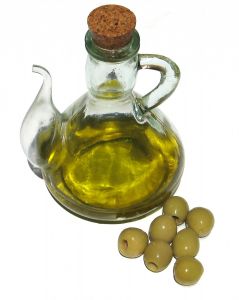
Another post from early April looked at the possible appetite suppression from a tablespoon of oil and a slice of whole wheat, whole grained bread.

Gay Riley, a certified clinical nutritionist and writer gave me some feedback on this one as well:

“Fat satiates and stays in the stomach longer, and the bread fills you up. I believe the protocol was 2 tsp olive oil (90 calories) plus a piece of wheat bread 110-180 calories. A good snack but high calorie for most. I will go for the theory that you will eat less dinner 20 minutes later if it is controlled portions. Basically it takes 20 minutes to get the CCK signal to the brain from the stomach via the vagus nerve that it is full or satisfied. Put simply. So if the theory is fullness and fat, then a salad with olive oil might do it as well. Just wait 20 minutes before you eat your meal. Olive oil is definitely a good thing all around but calorically it needs to be controlled for the benefits rather than the repercussions.”

If you have questions about anything posted on A Sizable Apple, email me at asizableapple@gmail.com and I’ll send them along to our in house nutritionists- Claudia and Gay for review.

Wednesday, April 16, 2008

Support local farms buying fresh

Carmen over at the ELFF Diet has a great new post on her blog about supporting local farmers by joining Community Supported Agriculture.

Joining a CSA creates a partnership between you and local farms. After becoming financially invested in your local farms, they will in turn supports you with a weekly basket of produce.

“By making a financial commitment to a farm, people become 'members' (or 'shareholders,' or 'subscribers') of the CSA.”
- Carmen

Take advantage of fresh produce in your area! Poke around at the CSA site. Search for local farmers markets in your area, or make contact to get involved with the program.

Friday, April 4, 2008

Negative calorie foods


A symphony to the dieter’s ears! After hearing some myths about the magical negative calorie content of celery, I decided to do a little dig to see what other foods shared this quality.

Negative calorie foods are classified as foods (mostly fruits and vegetables) that burn more calories being digested than they contain as a whole. With that in mind, I wasn’t shocked crunchy water stick celery was such a familiar negative calorie find.

But,

We better stop here to debunk any brewing ideas for a fabulous new diet trend. Sticking to this regiment deprives your body of a huge class of nutrients. Also keep in mind women’s bodies need roughly 2,000 calories per day to stay healthy. Snapping celery sticks on your plate for dinner isn’t gonna cut it. However, there are some instances where this group shines-

Snacks, side dishes and desserts. For all your off meal time cravings, negative calorie foods are a positive choice. Even when an apple isn’t what you had in mind, make yourself up a fruit bowl and break out a few spoonfuls of peanut butter or salad dressings to dip in.

Although dips are usually higher in fat and calorie content, pairing it with a healthy choice is a good way to go about cravings. This alternative can accompany tons of heavy partners. If you’ve got a high calorie meal, use a negative calorie choice as a side dish to balance.

Negative calorie foods give some flexibility over the traditional eating routines. If you’re bored and can’t get the kitchen off your mind, you can feel ok about giving in if your choices are thoughtful.

Negative calorie vegetables: Asparagus, beet, broccoli, cabbage, carrot, cauliflower, celery, chili peppers, cucumber, endive, garden cress, garlic, green beans, lettuce, onion, papaya, radishes, spinach, turnip, zucchini

Negative calorie fruits: Apple, blueberries, cantaloupe, cranberries, grapefruit, lemon, mango, orange, pineapple, raspberries, strawberries, tangerine, watermelon

Tuesday, April 1, 2008

Grocery shopping for dummies

When I was younger, I would head to the grocery store with my mom, usually under the coax that I could pick out a treat for keeping her company and not mindlessly running through the isles screaming or crying like many other children.

You would think, being familiar enough with a grocery store from those trips, and seeing same food day in and day out magically appear in our fridge at home, that once I had to actually grocery shop for myself, it wouldn’t be so life altering.

Wrong.

Last year, neither my mother nor my college’s cafeteria was responsible for feeding me. Still, at 21, shopping for food hasn’t proven to be an easy task. Trying to stay in shape at school, I understand that I am directly responsible for the fruit and vegetables (or lack there of) that go into my mouth. After much practice, and still some random hits and misses, I think I’m beginning to find an approach that works for me.

I’ve realized, however, that your success or failure with nutrition weighs heavily on your techniques in the grocery store. Your path through your local supermarket will dictate how well you meat nutritional guidelines. For instance, starting with processed foods (usually in the middle of the store on shelves) or spending more time in the aisles will result in more processed foods in your cart, which generally result in higher calorie and fat content than produce on the outer walls of the store.

This idea came from a great article I read by Dr. Pamela Avery. Her article, Eat around the edges, investigates the set up of grocery stores and the pattern of produce and healthy choices residing around the walls.

Dr. Avery explains the reasoning is because fresh produce needs to remain in a controlled climate, therefore relies on the electrical outlets and refrigerators that are often on the edges of the store. She continues that these areas should be considered the ‘green zone’ and make up a majority of your food choices.

Her mastering of the shapes and techniques of storage of foods provides a healthy routine while shopping. Another helpful approach to healthy shopping may be to clearly separate your produce from processed foods in your cart. This will help to make a quick visual distinction of your shopping habits.

What is your routine in the grocery store? What are some of your bad shopping habits?

Wednesday, March 26, 2008

How to fail at nutrition

After writing for A Sizable Apple for 8 months now, what I know about nutrition has significantly grown. Based on what I’ve learned, I’ve decided to compile a ‘how to’ on what I’ve learned, in reverse. Here’s my take- how to fail at nutrition.

  1. Shop unprepared:

Heading to the grocery store listless can be a horrible mistake. Pair it up with running on errands on an empty stomach, and your trip can be seriously hazards to your health. Be empowered, and shop on a mission! The grocery store is the most vital stop to managing your waist line. Know what you’re going for, be it recipes already in mind, or a list of what’s missing from the pantry.

  1. Skip breakfast

It’s called the most important meal of the day for a reason! If you’re normally not quite a morning person, pre-pack your morning start. No matter what, eat up! Breakfast helps keep your metabolism in check for the rest of the day.

  1. Forget the labels

I’m no nutritionist, but knowing the basics on the back of packaging is easy and important! Make sure the serving size number matches up with what your normal serving is, and that you’re not spending your precious calorie dollars all in one place.

  1. Pass up on all produce because of the expense

Fresh produce can get pricy, but that doesn’t mean you should skip it all together. Fruit and veggies come in a variety of different options, most of which keep longer in your fridge and put your wallet at ease. Make the best out of the frozen food section and canned fruits and veggies as well.

  1. Be bland

Keeping up with the best nutrition requires creativity. Cut calories with olive oil in a spray bottle, substitute pasta and potatoes with cauliflower or tofu noodles. Keep up with food blogs, helpful nutrition magazines and healthy sites that promote healthy eating.

Mastering eating well is a difficult feat, but a little creativity and attention can go a long way from bringing home healthy goods from the grocery store, to learning how to eat them properly once they are home.

Friday, February 22, 2008

Help saying goodbye to dieting

When I first saw the new ad campaign for Weight Watchers, I was taken back. After all, I have always thought of the Weight Watchers program, which requires participants to take part in a particular practice of eating, managing and controlling intake, as dieting.

a: food and drink regularly provided or consumed b: habitual nourishment c: the kind and amount of food prescribed for a person or animal for a special reason d: a regimen of eating and drinking sparingly so as to reduce one's weight diet>
- Merriam-Webber Dictionary

And while I value the attempt made by Weight Watchers to offer less restriction, more choices, and a stray from the idea of providing food, there are still restraints and a nutrition program to follow. I've never been a fan of dieting. I've always enjoyed food too much to think of restricting my intake.

However, I was taught early on through demonstration, that an understanding of nutrition beats out trying to force yourself upon parameters set by someone else.
Learning the basics of nutrition, starting with daily recommended intake in each food group to understanding reading a food label, you can manage your own diet. Because, honestly, why should someone who you've never met?

Women's Fitness.net had a few great top 10 features on managing a healthy diet without dieting. In their article, top 10 reasons to say goodbye to dieting, WF.net covers everything from learning how to manage fiber intake, low fat and lean meat, to managing portion sizes and eating with all your senses. This top 10 is a great start for those on their own trying trying to get a basic approach to managing nutrition. Top 10 ways to eat healthy is also a great starting point for nutrition knowledge.

WF.net's
top 10 myths and facts on food is another great place to start. Most of the myths debunked in this article are ones I've heard over and over again, some even boasted by diet plans. Myths about protein diets, fat vs. low carb foods, and carbohydrates as weight gainers are all explained. Knowing some truth behind these myths is a great way to start your own diet plan, if not a good starting point for what to look for when joining a diet.

The
top 10 best snack foods starts out with a great section on the benefits of snacking all together. Besides that, the article has 10 great tips on healthy snacks which may spark up some ideas for your own between meal plans. If you're looking to enrich your diet with some heart healthy, the top 10 most functional foods will help give you some ideas. Tomatoes and tea can help protect against certain cancers, while cranberry juice and yogurt will be beneficial to your urinary and gastrointestinal track.

Understanding the helping effects of food will put you at power with creating dinners and feeling comfortable in the kitchen.
For more WF.net nutrition help, check the top 10 ways to change your eating behavior, and for those interested in finding a diet that works for them, the top 10 ways to avoid dieting mistakes.

Tuesday, February 5, 2008

Reader Question: low carb, low sugar diets

One of my readers emailed me with a good question about dieting-

My husband is on a very low carb and sugar free diet. What is your opinion on these diets? New research on them? I find them extremely hard to stay on and do not have energy.

- Janel

I've never been a dieter. I love all different kinds of food too much to restrict myself and find I can maintain a desired weight with exercise and healthy eating. However, I understand that different dieting techniques work best for different people, and I encourage you, if interested in dieting, to read up on the best approach for you and try out several until you find one that works with your lifestyle.

I'm always weary to read about diets that cut out specific groups, as I think every food group is necessary in some regard. Carbs have been at the heart of the latest diets, promising results for cutting out the grainy group. I half agree, half disagree with the whole low carb theory. My explanation will take a bit of a nutrition lesson, so bare with me-

There are two types of carbohydrates- simple and complex. Natural simple carbs are going to be your basic fruits, while cakes, biscuits, honey, candy and refined sugar products. Basically, these guys are going to digest quickly, and give you an energy boost (hence the feeling of a sugar rush) without providing a ton of vitamins and minerals.

Complex carbs are where you're going to find your oats, wheats, whole grains, corn and beans. These guys are going to naturally provide you with energy from their vitamins and minerals.

While both provide you with energy, the quick disintegration of simple carbs in your body is more likely to convert your burst of energy into fat for storage.

With that information in mind, it's easy to see how cutting out carbs and sugar (sugar = simple carbs) from your diet can be beneficial. But, you'll notice that you'll want to keep some of those complex carbs around for their energy boost and essential nutrients.

To answer your question, Janel, to successfully manage a diet like your husbands, it takes some nutritional understanding. Because of the health benefits from complex carbs, I've found a lot of research against low/no carb diets. And while lean proteins have been shown to provide some of the energy boosting characteristics of complex carbs, I've yet to find research on any other food group that does wonders for your digestive system like the complex carb group does.

Of course everyone will have different results with different diets, but if you're looking to jump on the bandwagon with your husband on this one, I would suggest incorporating some of the complex carbs into your diet along with lean protein to see if that will help with your lack energy.

Here are two other sites I found that may be of interest for reading up on low carb dieting: My Pyramid Site & Kent State University Health Site. Hope this helps!

As always, I love receiving mail and reader questions. Email me at asizableapple@gmail.com with any blog feedback or to submit a reader question!

Thursday, January 24, 2008

Health Benefits of Garlic

In Mid-December, in one of my favorite links posts I mentioned a site that listed the health benefits of garlic. After finding a new site that looked at the benefits a little more extensively, I couldn't refuse giving the cloves their own post. Garlic is a major staple in my family's kitchen back home.

When I was younger, we use to buy a clove every now and then, and as my family's love for cooking grew, we began to purchase pre-minced garlic in jars.
Now it's quick to add a tablespoon to anything you're cooking up and the jar keeps the garlic fresh for a very long time.

Also, since its minced so fine, you're less likely to get notorious bad garlic breath because you won't be biting into any full cloves.
Beside great flavor, the health benefits of garlic are outstanding. Ajoene, is a natural antioxidant found in garlic that protects against strokes and heart disease with its anti-clotting abilities.

Garlic has been shown to ward away colon, stomach, breast and prostate cancer, and when applied topically, can stop the spreading of skin cancer as well.
Allicini, also found in the cloves promotes weight loss and lowers blood pressure. In general garlic can lower LDL cholesterol (although it can raise HDL cholesterol), and has been shown to reduce effects of exposure to asbestos. Its inflammation reducing skills make garlic beneficial to those suffering with osteoarthritis and rheumatoid arthritis.

It can fight germs that cause tuberculosis and a possibly kill leukemia cells.
If you haven't been swayed to swear to a life of voluntary bad breath, the antiviral and antibacterial properties of garlic can scare off a cold or flu as well. While all these facts may be a lot to handle, it's apparent that adding a teaspoon or two to your meals can be rewarding.

Even if you're not particularly handy in the kitchen, spoon a bit of minced garlic into soups, spreads, pasta dishes, stirfry or cook with chicken for some additional health benefits.

Wednesday, January 2, 2008

Diet Sabotage

As much as you are looking to succeed with your weight loss goals, friends, family and co-workers may not be so interested. Although most diet sabotage is unintentional, your loved ones may be uneasy as you alter your lifestyle, or may be jealous of the time you spend at the gym instead of with them.

Diet sabotage may stem from fear that your new habits will change your current relationship with your loved ones. Your husband may fear that your healthy habits will change your appearance making him somewhat uncomfortable with the visual balance in the relationship.

While these comments and acts may be occasional and unintentional, they can be detrimental to your goals. Comments like, "I don't want my wife to be wasting away on me," or "one piece one hurt," are all verbally slanted to push you off track. Co-workers may attempt to save the last donut after lunch for you or place candy bowls near your desk tempting you. Friends may ask why you don't eat their meatloaf anymore, or be upset when you stop attending taco night.

Committing to healthy changes is a very admirable decision. While at first it may be difficult for friends to understand why you can't stay for dessert, a little explaining and time will help. Explain to your family that you need help with your goals to make it to a healthy weight. Tell your significant other that you're not going anywhere and encourage them to join you on your quest to a better lifestyle.

Like when anything new is introduced to routine, its important to be open and explain your decisions, and also be aware if the actions of others stem from misunderstanding or true sabotage.

Wednesday, December 19, 2007

Wheat-grass

Just recently I came across the idea of drinking a blend of wheat grass for health benefits. I've heard that the grass, which is usually blended and drank like a shot, has some of the same incredible vitamins that dark vegetables provide.

So is it worth it?
This article from Stanford writes wheat grass off as a marketing gimic, while this site provides 40 reasons to wheat grass benefits.

While some sites boast the extreme levels of nutrients and other benefits, the old fashion approach to meeting nutritional guidelines will stand strong as my favorite method. After all, sticking to a recommended diet with a multi-vitamin will help you satisfy multiple aspects of your diet.
What's your take on wheat grass?

Monday, December 10, 2007

Healthy eating for holiday parties

'Tis the season to bring out that holiday cocktail dress, party hop and enjoy time indoors with family and friends. But, for all the party hopping you do this holiday season, how do you keep your figure and enjoy the best munchies at the bash?

Real Simple Magazine posted a great guide to choosing between red and white wine to simple appetizers. Here are my favorites from their guide:

Red or white wine?
Red wine wins this one for its cholesterol healthy and anti-blood clotting benefits. But, if you're prone to headaches, stick with white over red instead.

Hard vs. soft cheeses
When going in for the dairy, it's best to stick to soft cheeses which can be up to 40 calories less than its harder counterparts. On the other hand, you will get a more powerful punch of calcium from harder cheeses, offering up to 200 mg more.

Pigs in a blanket or mini quiche?
Although both options won't work wonders for your figure, quiche will score you some nutritional benefits like calcium and protein.

Ham vs. roast beef
Both are great sources of protein, but roast beef will score you almost three times as much iron, vitamin B. Ham contains more sodium than roast beef.

Chocolate kisses or candy canes?
This one goes to the cane. Although candy canes are almost pure sugar, nibbling on one of these will hold you over longer than a kiss.

Check the link for more tips like gingerbread vs. sugar cookies and coco vs eggnog as well. And as always, consider alternative tricks while out during the holidays. Filling up before you go out will save you from munching too much, and socializing away from the kitchen counter will also help you limit snacking on holiday treats.

Saturday, December 8, 2007

Nutritious choices on a budget

Recently I've heard a lot of talk from friends about how hard it is to stay healthy with a hectic life. In addition to that, much of the issue is on food and money.

Nutrition education has started to grow because of our national obesity epidemic, and although lots of women understand what eating healthy takes, few can actually afford a diet of fresh fruits and vegetables.


However, eating healthy is not just about the expensive produce section. There are other ways to eat well, especially on a budget.

Canned Fruits-
I must admit, if given the choice, I would always vote for fresh fruit over canned. However, canned fruit is one of the cheapest items in a grocery store, and also one of the most versatile and often over looked.

Canned fruits can be strained and washed for a fantastic quick fruit salad, and the juices left behind can be tossed with any sort of meat, used as dressing for salad or pasta, or the liquid base for rice.

Frozen Vegetables-
Again, not nearly as glamorous as the fresh section, but there are many benefits to buying frozen. First off, frozen assorted vegetables are quick and easy. You can throw them in the freezer and forget about them for awhile, and still come back to them later, something not remotely possible in their fresh form. Also, they are much more affordable and often pre-cut.

One example of the beauty of frozen vegetables is my favorite pineapple chicken stir fry which takes literally 5 minutes to make and is well under $10. Combine frozen veggies, grilled chicken strips with canned pineapple bits (and or pineapple juice, very cheap) and soy sauce.

Get your meat in on a budget-
Sadly, there's not too many ways to get around this one. Getting fried chicken at KFC is always going to be cheaper than buying the good healthy version.

I like to buy the biggest bag of frozen chicken breasts I can find and keep it in my freezer for whenever I need it. It can get a little pricey, but you definitely get your money's worth and if you can split it with roommates, you'd be in good shape.


How to do carbs right-
Whole wheat products, again, are most expensive than white bread or plain pasta. However, this may be helpful in your nutrition quest.

As a pastaholic, I haven't quite found a love for whole wheat pasta. When I do eat pasta, I try to mix half whole wheat and half regular, which has cut my noodle consumption.


What are some budget and health issues you have? What tricks do you use to manage your nutrition? What aspects of your health are still tricky for you to manage?

Thursday, December 6, 2007

Personalized Calorie Counter

Your daily calorie intake depends on several different factors. If you're younger, more active, or smaller framed, you'll need more calories daily than someone older or less active.

Counting calories daily is one of life's less exciting chores, and can also be near impossible. But knowing what your intake should be is a good way to figure out a ballpark to base your shopping and daily intake off of.


RealAge has a great
online calculator where you can plug in your personal stats to determine your personal calorie intake. The site also breaks down your fats, carbs and protein intake by percentage, grams and calories specifically, helping you narrow down your intake even further.

Tuesday, December 4, 2007

Make your own protein bars

Protein and granola bars are great to keep on hand. If you're on the go, need a quick breakfast, or a fast snack, reaching for something prepackaged is always tempting. However, packaged snack bars can be full of sugar, or quite expensive for the healthier versions.

A favorite among my siblings when we were little were Kudos bars, which were basically a chocolate covered granola bars plus chocolate chips and candy bar crumbles.

As evident by Kudos, the idea of nutritional snack bars has quickly spun out of control. Marketing to obese consumers who are more interested in flavor than nutritional values, snack companies are competing and taking over those companies who pride themselves on nutritional products.


Especially for parents, creating a healthy snack they can make with their children that is tasty is a perk.
I'm all for home making simple dishes as often as possible, to control intake. So, when I caught an article and video post for making your own protein bars, I had to share it with my readers.

The recipe I found was very simple and also included the nutritional information as well.
In addition, it seems fairly easy to substitute ingredients for something else. Dried fruit, cereal, or broken pretzels, could all be great additions to snack bars. While the following recipe was recommended, but altering the ingredients could keep some healthy variety in your life. Here's the recipe as given from the article I saw.

Stir together the following:

2 cups raw oatmeal

1 cup protein powder
1/2 cup flax seed
1/2 cup wheat germ

2 cups trail mix

1/2 cup ground walnut
1/2 cup coconut

1 cup honey
2 cups peanut butter

Move into oiled container & cut into bars

nutrtition facts: serving size 1 bar (68g) serving per recipe 24 amount per serving: calories 310 total carb. 31g 10% dietary fiber 4.2g 17% protein 11g

Here's a quick
link to the article, and also a link directly to the video.

Monday, December 3, 2007

Health Dilemmas Solved

It's a matter of life- should I have another chocolate? Work out twice today? Pizza for dinner or Chinese? As human beings, we're not perfect, and days come and go with health toss-ups and decisions.

Thankfully,
Real Simple magazine has paired up some of the toughest food and wellness choices to find the best choice all together. Here are some of my favorites-

Post dinner restaurant woes-
Your meal is wrapping up, but your night isn't finished yet. Should you go for a second glass of wine or dessert? RS says dessert! Real Simple says women should have one serving of alcohol a day, although they do suggest to choose your post dinner treat with moderation.

Sleep in or workout-
Real Simple says although eight hours of sleep is a recommendation, daily workout beats snooze time. Even those who enjoy their beauty sleep can grow accustom to waking up early.

"Going outside to exercise in the morning light will help reset your body clock and eventually make it easier to wake up earlier," explains Shawn D. Youngstedt, Ph.D., a sleep researcher at the University of South Carolina in Columbia.
Do or don't doughnut in the morning-
If it comes down to the doughnut or skimping on breakfast in the morning, RS suggests going with the doughnut. Although the pastry isn't the best for your body, starting the morning on empty is even worse for your system.

As for Chinese or pizza, RS suggests Chinese instead. Pizza is higher in calories and fat while you may get a couple good for you veggies in your Chinese takeout.

I'd highly suggest checking out the link for some great other tips on weights vs. cardio, stretching vs. walking for warm-up, and 3 workouts a week vs. a massive weekend blow-out.

What sort of toss-ups do you face throughout the week? How do you decide?

Monday, November 26, 2007

Serious Calorie Cuts

Thanksgiving may be over, but more holiday dinners are just around the corner. Looking for ways to home cook holiday meals is a definite way to help control calorie and fat intake. But, some of the best tips I've come across can be used all year round to drastically change your calorie intake in some of your favorite recipes.

Women's Health Magazine has an outstanding
article on short cuts to trimming oils and substituting to make the best of your favorites.

Tips like an oil spritz, baking for fried flavor, and substituting with broth are some of the most notable tips shared which cut from 100 to almost 3,000 calories.


The site also gives great tips on cutting calories with pasta substitutes. Cauliflower, squash, or tofu noodles can save you hundreds of calories.


Overall, I definitely recommend checking it out for every day solutions and daily swaps that can save you a bundle. What substitutions do you make at home? What kinds of non-healthy favorite flavors are you looking to switch up for?

Wednesday, November 21, 2007

Holiday Control

A Sizable Apple Readers:
I wanted to post a holiday eating guide before Thanksgiving. Here's a few tips to managing the season of food successfully. Enjoy the early post, and have a good Thanksgiving!


Welcome the holiday season, time for family, friends and the temptation of mass amounts of food. It's the time of year where a majority of diets go sour, and the beginning of the I'll definitely get to the gym tomorrow compromise for another cookie which turns into six.

The Washington Post
estimates that Americans eat about 4,500 calories and 229 grams of fat on Thanksgiving alone, which is more than double the daily recommendation.

This year, don't let the holidays be your excuse to give in no matter what stage of health you're in. Being ahead of the gang come the New Years resolution rush will make staying on track past February much easier.

For Thanksgiving and other holiday dinners, think about these steps for staying true to your figure.

Helping Hand-
Offering to help make dinner or bring a dish to share is not only thoughtful and impressive, but can help you better control your intake. There are several ways to cut back on the calories in traditional Thanksgiving dishes.

The skin on meets, extra cheese in casserole dishes, and salty foods are dangerous additions to your plate. Here is a great site that gives tips on substitutions for holiday meals.

Portion Control-
This becomes a bit harder as it seems plates grow in size, and are piled higher. Stay true to your normal portions. Choose to be served on smaller plates than the rest of your family. Serve yourself smaller than normal portions to make yourself feel better about going back for seconds.

When you are fixing your plate, try to fill it more with vegetables than starches. Less mashed potatoes and gravy, more green beens.

Stall-
Eat until you feel full and you'll most likely feel like you're about to explode 15 minutes later. This is because our bodies take some time to digest food, thus the feeling of over eating that Thanksgiving is known for.

Stalling during dinner is a perfect way to keep from going wild on stuffing. Think about leading dinner time conversation, drinking more water or cutting up your food into smaller pieces.

Snack-
In this case, snacking may not be the enemy, but if you're munching on some left over veggies from the stuffing, you can skip the need to stuff your face at dinner.

Thanksgiving isn't an excuse to skip lunch. Making it to dinner content instead of starving will help you eat less.

Tread Tradition-
Exercising right after turkey dinner isn't everyone's idea of a great time, but getting your family to go on a walk between dinner and dessert is a better alternative to laying on the couch watching football.

As with all tips for controlling your intake during the holiday season, make sure to eat consciously, and be attentive your plate to know when its time to turn away the extra dessert. What keeps you on plan during the holidays? How do you know when you've had enough?