Get your back rolls removed! What??
There's a NEW surgery out there that will lift and tuck those pesky "back breasts" out of your way. Now I've heard it all.
My first ASA post was a readers opinion article on plastic surgery. Over a year since that, I'm curious to see, what do you think now? A new surgery for back rolls makes me wonder about where plastic surgery is headed. Do you have wider fingers that need a nip and a tuck?
I'm curious- what do you think about back rolls? While I've noticed them before, it's never changed my judgment on someone. You can find fit bodies at the beach with a little extra luggage back there. Is your back an area of concern for you? If you could make up a plastic surgery procedure, what would you go under the knife for?
Sidenote: Check out ABCNews covering JLo's back rolls!
Thursday, September 25, 2008
Back rolls?

Wednesday, September 24, 2008
Kiddie equipment
 Get your kids moving on their own workout equiptment?
Some experts are saying this is a horrible idea, and may be pushing kids too hard in the direction of fitness. Parents however seem to like the idea.
I think the equipment is awesome! While its been argued that kids using this equipment are missing out on the fun of social interaction sports like tag and kickball, I think the pros outweigh the cons. The last time I saw neighborhood kids out playing tag and kick-the-can was when I was doing it. There are too many toys that coax kids to stay inside, and the idea of playing outside is as foreign to kids now as a typewriter.
Most children want to emulate their parents, or older siblings. I don't think any child should be made to spend 20 minutes on a kiddie treadmill, but when mom or dad is on the in home stationary bike, giving junior the option to ride along to can be an empowering experience. Even for physically active children, there is an appeal to kid equipment. Eventually Billy is too old to play on the school soccer team, but if he grew up with a familiarity to exercise equipment, will he be more prone to going to the gym on his own?
What's your stance?
Monday, April 21, 2008
How to get serious about fitness
 For most women, getting in shape is an off and on project. It’s hard to keep on track with everything else life throws at us. Yo-yo dieting and exercising are sadly a way of life for too many women.
- Get real
There’s no way you’ll succeed with fitness if you let it consume you. Watch out for some signs that you’re working too hard: constantly weighing yourself, being critical of every change in your figure, dedicating all your time to dieting and slaving away at the gym. These tasks are ok to practice in moderation, but not to practice regularly. Don’t let your fitness goals outweigh your life.
- Share your goals
Tell your friends and family what your plans are. You may fear talking about your goals in case you don’t meet them, but this strategy empowers you to quit without repercussions.
Brining those who care about you in on your mission holds you accountable for your goals. More so, good friends will act as a safety net, pushing you to get back on track when you falter and commending you for reaching milestones. Your goals may also be the inspiring push a relative needs to get going with their goals as well.
- Admit imperfections quickly
No one is perfect. Even all star athletes can’t keep to their recommended diets and miss a workout from time to time. Giving in to cravings is ok now and then and missing a workout won’t ruin your goals.
Also, accept help where it’s available! If you’re new to the gym, get a friend to show you around or hire a personal trainer for the day to set you up with a program. For nutrition help, head to your doctor or a nutritionist for advice on how to balance your diet. If creativity is an issue with keeping workouts fun and altering dinner options, subscribe to a health and fitness blog (A Sizable Apple is a great one!), or health magazines for other options.
- Chart and reward
Keep track of your progress! When you have a bad day, it will help you to see how far you’ve come (or even how much farther you have to go). Likewise, when you have a really good day and feel invincible, consult your chart to remind yourself not every day is so fabulous. The more dedication you can put into tracking your progress the more likely you are to keep up.
When rewarding, treat yourself to something you love. I’m not talking about a trip to Dairy Queen when you shed that first five pounds. Learn to love new things that promote continuing on your healthy track. Be it new running shoes, a yoga mat, or splurging on some more expensive fruits and vegetables for dinner. Keeping these treats in mind will inspire you to work a little harder on the less than motivating days.
Thursday, April 3, 2008
Reality TV- I can make you thin
 While doing homework and thinking up new blog posts, I mindlessly had the tv on in the background. I couldn’t help but be interested in TLC’s new show- “I can make you thin”.
Wednesday, March 26, 2008
How to fail at nutrition
 After writing for A Sizable Apple for 8 months now, what I know about nutrition has significantly grown. Based on what I’ve learned, I’ve decided to compile a ‘how to’ on what I’ve learned, in reverse. Here’s my take- how to fail at nutrition.
- Shop unprepared:
Heading to the grocery store listless can be a horrible mistake. Pair it up with running on errands on an empty stomach, and your trip can be seriously hazards to your health. Be empowered, and shop on a mission! The grocery store is the most vital stop to managing your waist line. Know what you’re going for, be it recipes already in mind, or a list of what’s missing from the pantry.
- Skip breakfast
It’s called the most important meal of the day for a reason! If you’re normally not quite a morning person, pre-pack your morning start. No matter what, eat up! Breakfast helps keep your metabolism in check for the rest of the day.
- Forget the labels
I’m no nutritionist, but knowing the basics on the back of packaging is easy and important! Make sure the serving size number matches up with what your normal serving is, and that you’re not spending your precious calorie dollars all in one place.
- Pass up on all produce because of the expense
Fresh produce can get pricy, but that doesn’t mean you should skip it all together. Fruit and veggies come in a variety of different options, most of which keep longer in your fridge and put your wallet at ease. Make the best out of the frozen food section and canned fruits and veggies as well.
- Be bland
Keeping up with the best nutrition requires creativity. Cut calories with olive oil in a spray bottle, substitute pasta and potatoes with cauliflower or tofu noodles. Keep up with food blogs, helpful nutrition magazines and healthy sites that promote healthy eating.
Thursday, March 20, 2008
Weight weighing on your mind
 Be it New Years, an upcoming reunion, a wake up call or a change in outlook, health alerts come at different times and different times for everyone. No matter when your alarm goes off, don’t break off more than you can chew. A recent article in the New York Times showed that as the percentage of desired weight loss increases, men and women alike showed an increase in days feeling physically or mentally unhealthy. The article concludes that the boost in unhappiness may be a result of the constant stress of worrying. Especially for those who attempt to slim down with an event in mind, self pressure may foil weight loss plans.
Monday, March 17, 2008
The math behind dieting
 I’ve never been a math person. Maybe that’s why I’ve never been a diet person either. If it’s not required for a class or needed to figure out how much my roommates owe me for bills, I ain’t calculating it.
Friday, March 14, 2008
Instant Gratification- our addiction to the promise for fast results
 In our fast pace world, the wait for weight loss is a hard concept to grasp. Despite what late night infomercials may want you to believe, maintaining a healthy lifestyle and healthy figure is not something that can be bought, or accomplished within a week.
Tuesday, February 5, 2008
Reader Question: low carb, low sugar diets
One of my readers emailed me with a good question about dieting-
My husband is on a very low carb and sugar free diet. What is your opinion on these diets? New research on them? I find them extremely hard to stay on and do not have energy.
- Janel
I've never been a dieter. I love all different kinds of food too much to restrict myself and find I can maintain a desired weight with exercise and healthy eating. However, I understand that different dieting techniques work best for different people, and I encourage you, if interested in dieting, to read up on the best approach for you and try out several until you find one that works with your lifestyle.
I'm always weary to read about diets that cut out specific groups, as I think every food group is necessary in some regard. Carbs have been at the heart of the latest diets, promising results for cutting out the grainy group. I half agree, half disagree with the whole low carb theory. My explanation will take a bit of a nutrition lesson, so bare with me-
There are two types of carbohydrates- simple and complex. Natural simple carbs are going to be your basic fruits, while cakes, biscuits, honey, candy and refined sugar products. Basically, these guys are going to digest quickly, and give you an energy boost (hence the feeling of a sugar rush) without providing a ton of vitamins and minerals.
Complex carbs are where you're going to find your oats, wheats, whole grains, corn and beans. These guys are going to naturally provide you with energy from their vitamins and minerals.
While both provide you with energy, the quick disintegration of simple carbs in your body is more likely to convert your burst of energy into fat for storage.
With that information in mind, it's easy to see how cutting out carbs and sugar (sugar = simple carbs) from your diet can be beneficial. But, you'll notice that you'll want to keep some of those complex carbs around for their energy boost and essential nutrients.
To answer your question, Janel, to successfully manage a diet like your husbands, it takes some nutritional understanding. Because of the health benefits from complex carbs, I've found a lot of research against low/no carb diets. And while lean proteins have been shown to provide some of the energy boosting characteristics of complex carbs, I've yet to find research on any other food group that does wonders for your digestive system like the complex carb group does.
Of course everyone will have different results with different diets, but if you're looking to jump on the bandwagon with your husband on this one, I would suggest incorporating some of the complex carbs into your diet along with lean protein to see if that will help with your lack energy.
Here are two other sites I found that may be of interest for reading up on low carb dieting: My Pyramid Site & Kent State University Health Site. Hope this helps!
As always, I love receiving mail and reader questions. Email me at asizableapple@gmail.com with any blog feedback or to submit a reader question!
Monday, January 7, 2008
Ultimate Fitness Plan: 2008
 Last November I wrote about Women's Health Magazine's Ultimate Fitness Plan for 2007. Although I brought the news of their plan late, I promised to keep on my toes about new plans for 2008. As promised, here is WH's 2008 fitness plan.
The plan has a 6-month workout program, tests to gauge your starting fitness level and to track improvement, a workout log, videos, and expert advice. Signing up for the program was among the easiest of all programs I've reviewed. The fitness program has a simple starting test to see where you stand before recommending programs.
Although the test is helpful to see where you stand, it didn't seem to be very effective in judging a starting point as some other programs have been (especially last year's 2007 WH program). I do admire how hands on the Ultimate Fitness Program is. They provide varying workouts and allow you to plug in your reps, and the amount of weight you use.
This is a great method to keeping track of how much you're lifting, and UFP also allows you to view each exercise, with details of how to do it and what muscles groups it works. The site allows you to retake your assessment test as often as you would like to stay on top of your routine.
The one flaw I found with the 2008 plan is the lack of nutrition help. Some of the other programs I've seen have nutrition options and changing meal plans to incorporate to your routine. A fitness plan should focus on all the aspects of healthy living, and this one seems to fall short in that department.
Overall, I would suggest the WH magazine's Ultimate Fitness Plan for those who are looking for new exercise tips, and looking for a way to keep track of your progress. If you're looking at starting a healthy lifestyle for the new year all together, I would suggest looking at the Discovery Health National Body Challenge, I've posted a review here.
Thursday, January 3, 2008
National Body Challenge 2008
 Every year we look for new ways to help us with our resolutions. One of the most popular resolutions is to lose weight. In November, I updated about Women's Health Magazine's 2007 Ultimate Fitness Plan they devised to help participants keep on a healthy track for the year. Although I found the plan towards the tail end, I promised to look for another program I thought would be equally as helpful for those looking to start out the New Year right.
I came across a Discovery Health program for 2008 called the National Body Challenge. According to the plan, they take your current statistics and offer you a personalized program with breakfast, lunch, dinner and snack options as well as an alternating fitness plan. They work with your preferred diet and current level of fitness to create your specific plan.
Another interesting feature of the program, is their Free Bally Fitness Center Pass. Although I have yet to truly look into this aspect of the program, the information I've read states each person who signs up for this program will receive an 8 week free pass at Bally's. While this won't nearly last you the entire year, it would be a good start to getting on track for the year and potentially lead to a full year membership.
In addition to their nutrition, fitness and progress checking options, the program has tons more to choose from. There are videos, new weekly features, support stories and connections, mind, body and spirit articles and features, as well as updates from a doctor, games, recipes and reminders. Because the program is run through Discovery Health, they have a guide of Discovery Health programs on television that match up with more healthy education.
There's also access to the Discovery Health store where you can take a look at different products, for additional help on your quest. For those already stuck on their current fitness programs, or not quite interested in all that the Discovery Health Program has to offer, I'd still highly recommend signing up for the program. If nothing else, you will have access to a fully planned menu at all times that you can tweak to your liking.
You can also continue checking back with your measurements to determine if you're in a healthy zone or not. And if the Bally's free pass idea doesn't excite you, you may be able to pass it off to a friend. The program is great for those on a budget, because you could ultimately use your Bally's pass during the colder months and continue your workout routine outdoors when the weather turns nicer. All in all, the program looks very promising. Discovery Health offers so many opportunities to get on track, take advantage and poke around on the site!
Thursday, November 29, 2007
BMI- TMI
 After all the health hunting I've done on the internet, I've come across many pages that promise to help you with this, that, and figure out exactly what you need based on your plug ins. I've been told what my body age is (as apposed to to my annual calendar age), what my exact workout plan should be, my daily calorie intake number down to a tee, and now my body mass index as well.
While some of these sites are obviously more legit than others, it's an interesting thought to plug in minimal information about yourself to be chugged through a hidden system and provided with a figure. What do you believe? If you run with the information from every site, you're a fool of the system. What kind of calculator and system are these sites using? Is someone behind the site a legitimate health figure, or someone after your visit?
I've always tried to pass along sites that I believe are the most accurate and well handled. However I'm not a doctor and I only have what I've learned through blogging, nutrition and my web knowledge. I hope that as readers, you visit every site with a grain of salt and take nothing as a serious end all be all word.
That said, the latest site I've come across, offers a body mass index finder which uses your height and weight to determine your standings. This site actually shares their equation, plus backs their information up with a government health site. While their calculator cannot determine your fat to muscle ratio, it does warn at the bottom that they may incorrectly place you depending on your athletic build.
While I always think relying on a computer program to give you such important health figures is dangerous (a doctors visit is always best), keeping a general figure in mind is good to have in mind for those health conscious.
Monday, November 19, 2007
Ultimate Fitness Plan

I was looking at Women's Health Magazine online, (one of my favorite inspirations for blog posts) and came across a guest blog. This woman has been on WHM's Ultimate Fitness Plan 07 and has been recording her progress. So, I got a little curious and poked around for what kind of "ultimate" plan she was talking about.
Apparently, more than just that blogger thought the fitness plan was a good idea, according to this press release, 21,000 people participated in the first month alone.
Turns out, WHM has a pretty cool program going on. They boast that their six month program will buff you up to be in the best shape of your life. The program comes with an expert designed 5 part test that determines which what level you should start out at. The tests are really simple, and well described, and really should only take a few minutes of your time. Even for the fitness gurus reading, the fitness test may be a good way to see where you're at anyway.
In addition, the Ultimate Fitness Plan promises to better your health and specifically increase your abilities in the 5 part test. Every two weeks WHM provides a new workout routine, changing things consistently, and new exercises every 8 weeks for more variation. WHM also has all your questions and motivation issues covered. Expert advice for all your concerns and daily tips and motivation will keep you going.
Overall, their program definitely sounds interesting, and complied with all their extra factors and the guest blog of a real woman participating are all great additions to going at it on your own.
Although the challenge was created in December of last year, thus a little dated, but I'll make sure to post if I see a new fitness plan coming up for the next year.
Monday, October 8, 2007
Extensive Restaurant Guide
 A few posts back I covered eating smart at fast food joints, but what about other restaurants? Many restaurants are starting to get smart about their menus by offering half sized portions or health conscious sections. However, very few if any, will give you the nutrition information you're looking for when making a decision on what you put into your stomach.
When we cook at home, we have full control over what goes into our food. A pinch of oil instead of a half a stick of butter, the trim on meat, the quality of the vegetables. However, this link on the American Heart Association site offers an expansive guide to mastering eating out without taking too much in.
The site covers 15 different types of restaurants, with an elaborate guide within each to what to look out for and what you can make replacements with. Housing a variety of helpful information from such a credible source, I urge you to check this page out, even bookmark it for when you are ready to hit the local eateries next.
Saturday, October 6, 2007
Aerobic vs. Anaerobic Exercise
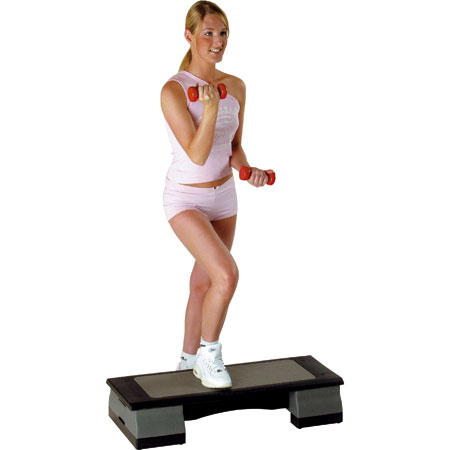 The typical woman who squeezes in a few hours a week for a workout may not be educated in the actual science of what her muscles are doing. But, given the understanding of the brains behind your aching muscles, you can get the most out of your workouts.
Aerobic and anaerobic exercising describes two different kinds of work your body does while you’re in the gym. Aerobic exercise causes your body to use oxygen to make energy. While anaerobic exercise does the opposite- your body creates energy without oxygen. This occurs because your body needs energy so badly it will create it from other chemicals in your body.
What does all this really mean? During your workout, you may unknowingly switch from aerobic to anaerobic exercise. The simplest way to tell is by monitoring your heart rate. When you are working at about 70% of your maximum heart rate (225 less than your age), you are doing aerobic exercises. The way you perform your exercise determines if you are workout out aerobically or anaerobically.
Why exercise one way over the other? Your method of workout depends on what you are attempting to accomplish. Anaerobic exercise burns more calories than aerobic (about a 6/1 ratio). Where as aerobic exercise burns 25% muscle and 75% fat, anaerobic exercise burns 100% fat.
Typically anaerobic workouts use resistance training equipment, such as weights or machines in your gym. However, the best health benefits can come from knowing how to mix aerobic and anaerobic exercise successfully.
Using a treadmill, elliptical, stair stepper, stationary bike or other machine of the sort most likely already has aerobic/anaerobic programs built in. Choosing a program with sporadic intense hills and using occasional high resistance (anaerobic) combined with long sprints and low resistance (aerobic) is a great way to grow use to using the best of both worlds.
Odds are, enrolling yourself in a cycling class, or jumping on a machine and using a set program will do more for you than straight running or biking will in about the same amount of time.
For more information on aerobic and anaerobic training, talk to a family doctor, fitness instructor, or do a bit of research online.
Friday, October 5, 2007
E L M O
 I never heard about the ELMO diet until my roommate brought it up one day. The Eat Less More Often diet is one of the many tricks and techniques to shed pounds.
Of course the natural method of old fashion good nutrition and exercise is the best way to go about weight management and health control, the strategy of switching up meal amounts or sizes is a controversial one.
The truth is, everyone's body is different. Most of us are to a point in our lives where we know what our body wants and what helps it operate in the best of its ability. Just like some of us need that caffeine in the morning to get going, others can get by with relying on a set schedule of feeding times.
An interesting question/answer session on Columbia University's Health Q&A Internet Service did a great job of looking into the myths of different portion and variations of meals.
"Various studies have examined the connections between eating patterns and obesity. Even with the same number of calories, people who ate fewer times per day were actually at a higher risk of becoming obese. People who skipped breakfast in particular were more likely to be overweight. Scientists believe skipping breakfast may lead people to crave more calorie-dense foods later in the day."
In addition the article goes on to look at the health risks of eating one large meal a day as well as eating various small meals (ELMO style) throughout the day. Changing the typical eating patterns can affect your blood insulin levels as well as your natural metabolism.
The site does a good job of giving alternatives to weight loss with food. Whole grains, beans, fruits and vegetables all enhance your body's natural ability to lose weight. Fiber (as noted in a previous entry in this blog) also helps your body maintain regularity.
Monday, October 1, 2007
A Real Reason to be get Excited about Apples this Fall-
 I’ve been sent another great article about the benefits of apples on your diet.
Seems like some of the old standards still apply- don’t peal that skin off, it’s packed with nutrients.
The article also points out which apple is better than others. Doing a little extra research on a good thing can pay off with extra vitamins and minerals that you might not cash in on.
In addition, I found the relation from apples to weight-loss in the article very interesting. It’s a valid point though. If you’re looking to lose weight, or even increase your intake of fruits and veggies, try snacking on some before dinner. Nothing feels better than passing on an extra helping of rice because you filled up on apple slices.
What’s your favorite go to fruit or vegetable?
If you are a victim of bursitis, better give up on kettler.
Even the treadmills should be avoided.
A good option would be the bowflex.
Saturday, September 15, 2007
Why Eat Breakfast?
 It's been said many times over, breakfast is the most important meal of the day. But why? What's the big deal? It's tough to fit preparing a meal in a busy morning when you're trying to book it out the door. But this article in one of my favorite blogs brings up the ever long issue.
When you do a little research, the subject of skipping breakfast sounds valuable. Skipping a meal in the morning forces your body to live off what you ate before you go to bed. For most of us, that can go on 12+ hours without food. You need to fuel your brain to walk, talk and think from the glucose breakfast brings.
Breakfast is also a great way to get in your nutrients for the day. Skippers may find it hard to make up for missing 1/3 of your major opportunities for vitamins and minerals.
And the age old myth about skipping breakfast helping lose weight? Wrong! Eating a well balanced breakfast actually helps keep your metabolism in check. Refusing to fuel your body after hours of sleep can actually lead to over-eating later on in the day.
So, even if it's just a bottle of juice, fruit and a granola bar, give yourself the chance to start each day on the right foot with breakfast!
Monday, September 10, 2007
Keeping a Food Log
 Visit a nutritionist and your first assignment will most likely be to start a food log. Doctors often ask patients to keep track for a few weeks to determine issues, and weight loss groups focus on keeping track of your daily intake. Although writing down every meal and snack can seem meticulous and daunting, it can be very beneficial.
If you suffer from any constant problem from heart burn and high blood pressure to muscle cramping and acne, monitoring your food patterns can simply clear up issues. A post I found here gives some great information on starting a food log.
Reviewing your log can bring light to what foods you are leaving out of your diet. It can also be a great way to track your desserts, planning when you can treat yourself instead of doing so randomly. Depending on your needs, your log will most likely differ drastically from anyone else’s. Those looking for a weight management agent will find comfort in the reliability and simplicity of the log, while others who cook for a family may rely on theirs to determine when it’s time to change up dinners.
Thursday, September 6, 2007
Fighting Through Sweet Cravings
 Do you feel over powered by your sweet tooth? We all have moments where nothing will do like a chocolate bar (and those are not to be ignored!), but the trick to staying in shape is to recognize and treat your cravings smart. Using portion control and tricky techniques, giving in to your temptations won’t curb your diet.
One interesting tip I picked up from this article, is to head to vegetables when your sweet tooth speaks up. Sounds strange, but by adding a semi-sugary taste to your meals, you become less likely to crave an after dinner candy bar. Vegetables like cooked carrots, sweet potatoes, squash and beets all have a light sugary taste. Incorporating a little sweet with your dinner in a healthy way will definitely keep you on track with fitness.
Don’t try to ignore or fight your cravings. Often, trying to keep to a very strict diet ends up in a nasty back-fire. Recognize what you’re craving and try to find alternative ways to treat it, or treat it smartly with small portions. Be prepared ahead of time for cravings to strike. Life is far too short to imprison ourselves, not allowing certain foods in. Be smart about what you’re eating when you eat it and you’ll inevitably save yourself from a sweets attack later on.
Portion control. I’ve talked about this before. Stuffing a whole candy bar down your throat is worse for you than you may think. Check the nutrition facts (and serving amount) listed on the back and you’ll be overwhelmed to see what you’re putting in your body. If you’re prone to sweet attacks, look up a simple semi-healthy sweet recipe you can make.
Cut the servings down small. You can still get the sweets you crave if you are smart about servings. Need ice cream? Try filling a small cup with a scoop. Pre-package candy or cookies into smaller containers when you buy them. Don’t stand in the kitchen, next to the cookie cabinet while eating your sweets, if makes going back for seconds much easier than if you took a cookie on the go with you, or sat down with a book and ate it slowly. I’ve also found if you eat sweets with enough liquid, it helps break down the taste left in your mouth afterwards that begs for another.
Sometimes our snack attacks are far past grabbing a piece of fruit or a yogurt. When they are, teach yourself to feel OK about giving in by doing so appropriately. What are your sugar weaknesses? How do you control your intake?